
When Liability Isn't as Clear as It First Appears
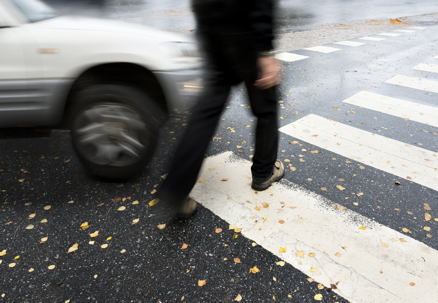
A pedestrian enters a marked crosswalk expecting drivers to recognize the right of way and act accordingly. But when a collision happens, the driver or insurance company may try to tell a different story. One common defense is that the pedestrian entered the roadway at the wrong time or failed to yield.
That was an important issue in a case involving a client who was struck by a vehicle in a grocery store parking area. The defense argued that the driver had the right of way because the pedestrian entered the crosswalk after the driver had already begun making a left turn. The evidence ultimately told a different story.
The case resolved for $2.125 million after extensive preparation, including accident reconstruction analysis and depositions of the experts involved.
Accident Reconstruction Changed the Liability Question
In pedestrian accident cases, determining who had the right of way can depend on the precise sequence of events. Where the pedestrian was standing, when the vehicle began moving, and how quickly both parties were traveling can all become important.
The defense's position depended on the idea that the driver had already begun her left turn before the client entered the crosswalk. Accident reconstruction analysis challenged that account.
The reconstruction expert was able to analyze the available evidence and establish that:
- The client's position mattered. The analysis showed that he had entered the crosswalk before the defendant began her left turn.
- Timing changed the picture. Establishing the sequence of events directly addressed the defense's argument about who should have yielded.
- The evidence supported the client's account. Rather than relying solely on competing statements about what happened, the case could be evaluated through an objective reconstruction of the collision.
That distinction was critical. In a pedestrian collision, a relatively small difference in the timing of a vehicle's movement and a pedestrian's entry into a crosswalk can substantially affect the liability analysis.
The Injuries Continued Long After the Collision
Winning the liability argument was only part of the case. The extent to which the collision changed the client's life also had to be understood.
The client's injuries were permanent and ultimately affected his ability to continue working in the same capacity. He was forced to retire five years earlier than planned because his injuries could not be accommodated by his job.
Even after treatment, the effects of the accident remained part of his everyday life, affecting:
- His ability to work changed. Permanent injuries prevented him from continuing in his occupation as he had before the collision.
- His retirement came early. He was forced to leave the workforce five years sooner than he had anticipated.
- Pain remained an ongoing problem. He continues to experience low back pain related to his injuries.
- Additional treatment presented a difficult choice. A second surgery was recommended, but after already undergoing significant medical treatment, he decided that he did not want to undergo another operation.
These consequences are important in understanding the value of a serious personal injury claim. The impact of an accident does not necessarily end when medical treatment concludes. A permanent injury can affect a person's ability to work, participate in everyday activities, and plan for the future.
Preparing the Case for Mediation & Trial
The case did not resolve immediately. Like many significant personal injury claims, it required substantial preparation before the parties were in a position to meaningfully evaluate a settlement.
The litigation included expert testimony and depositions. By the time the case reached its eventual resolution, the parties had a much clearer understanding of the evidence and the strengths and weaknesses of their respective positions.
That preparation included:
- Accident reconstruction evidence. The expert analysis provided important support for the position that the client had already entered the crosswalk before the vehicle began its left turn.
- Expert depositions. Depositions allowed the parties to test the opinions and methodologies of the experts involved in the case.
- Medical evidence. The client's permanent injuries, treatment history, ongoing pain, and future medical considerations were important components of evaluating the claim.
- Employment consequences. The fact that the client could no longer continue working in his previous capacity demonstrated the long-term economic impact of his injuries.
Thorough preparation also meant being ready to take the case to trial if necessary. A settlement is often most productive when both sides understand that the case has been prepared for the possibility of trial.
A Second Mediation Led to a $2.125 Million Settlement
The case ultimately settled at a second mediation shortly before trial. By that point, the expert depositions had been completed and the evidence had been developed extensively.
The timing was significant. Mediation was not simply an early attempt to compromise before the case was fully understood. It occurred after the parties had invested substantial effort in developing and testing the evidence.
The settlement provided a resolution without requiring the client to endure a trial, while recognizing the serious and permanent consequences of the collision.
For an injured pedestrian, reaching a fair settlement can be especially important when injuries have already changed the course of work, health, and daily life. A resolution can provide financial resources while avoiding the additional uncertainty and demands of a trial.
What This Case Shows About Pedestrian Injury Claims
Every personal injury case turns on its own facts, but this case illustrates why preparation matters when liability is disputed.
Important issues may include:
- The precise sequence of events. Establishing when the pedestrian entered the crosswalk and when the vehicle began turning can directly affect the liability analysis.
- Objective evidence. Accident reconstruction can provide a way to test competing accounts of how a collision occurred.
- The full impact of the injuries. A claim may involve far more than medical bills when permanent injuries affect employment, retirement, mobility, and quality of life.
- Preparation before settlement. Mediation may become more productive after the evidence has been developed and both sides understand the potential risks of proceeding to trial.
A pedestrian accident claim is not necessarily straightforward simply because a person was struck in a crosswalk. Insurance companies may dispute liability, question the circumstances of the collision, or attempt to minimize the long-term consequences of an injury. Building the evidence needed to address those arguments can make a meaningful difference.
When You Need Help After an Accident
If you were injured as a pedestrian, you may be dealing with medical treatment, lost income, lasting pain, and uncertainty about what comes next. When the circumstances of a collision are disputed, careful investigation and preparation can be particularly important.
Richard | Bartlett Lawyers represents injured individuals in Ventura and throughout the surrounding communities. Our attorneys can investigate the circumstances of your accident, work with appropriate experts when necessary, evaluate the full impact of your injuries, and pursue compensation from the responsible party.
Call (805) 438-2440 or contact us online to discuss your case.